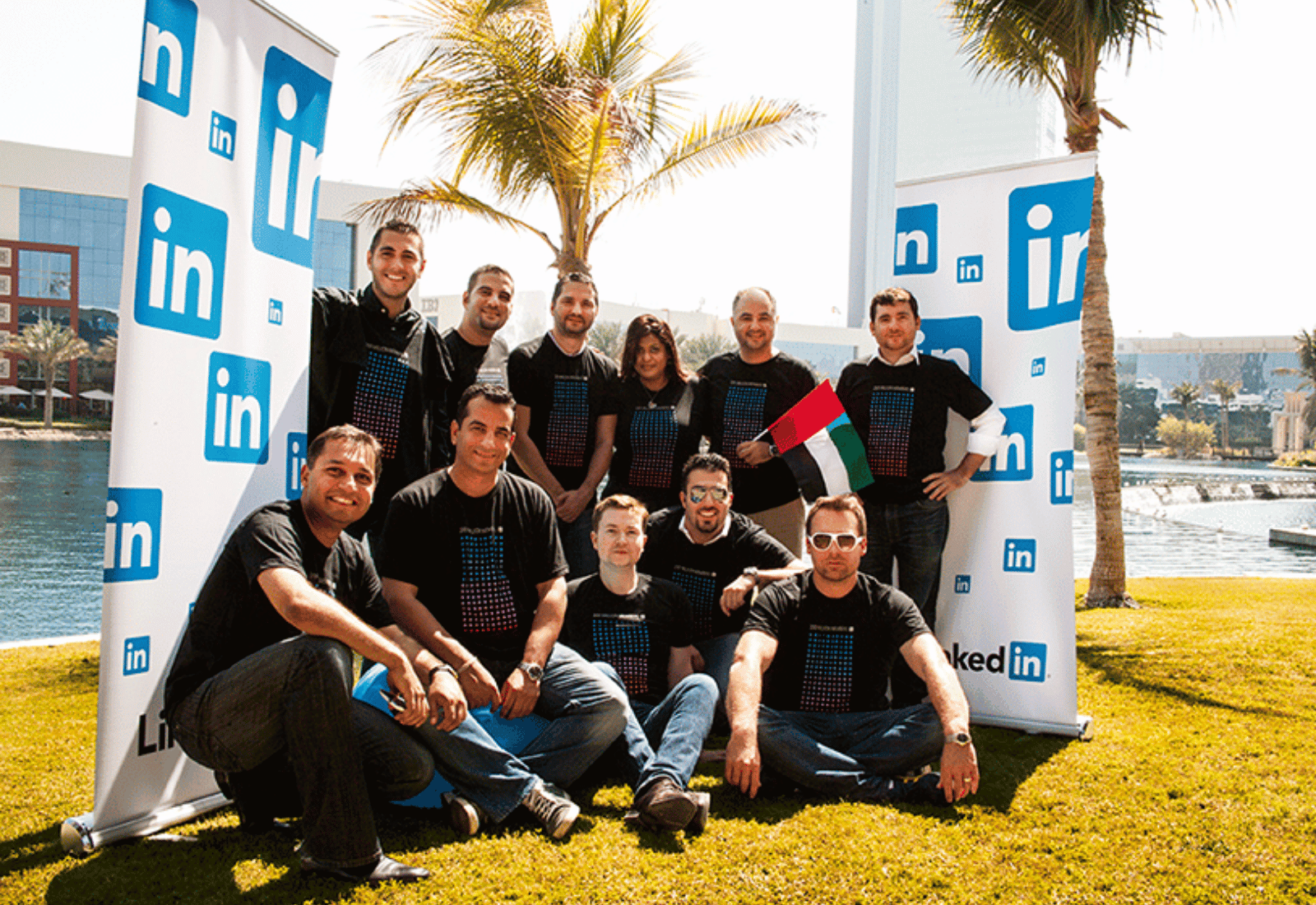
A high-performing sales team is a system, and building it is the manager’s job. I learned that leading a team of about ten at LinkedIn in the Middle East, and I’ve managed salespeople the same way since. The system covers how I hire, test, onboard, coach and motivate people and, when it’s needed, how I let someone go.
Every part does the same thing. It replaces a gut feeling with evidence.
In this article
- Hiring gets the least time and pays back the most
- What does a finalist exercise show that an interview can’t?
- Onboarding ends when someone has watched the rep sell
- Each person on the team needs a different manager
- A fixed weekly rhythm is where the coaching happens
- How do you keep a sales team in the race when the quarter is behind?
- Letting someone go late is the least compassionate option
Key takeaways
- Hiring is slow, and a wrong hire costs the manager and the team far more than the time saved.
- Give every finalist the same exercise, the same deadline and 30 minutes with one of your reps.
- Onboarding runs from training to shadowing to being shadowed, with a buddy throughout.
- Work out each person’s motivation and performance before deciding how to manage them.
- Act early on sustained underperformance, with a clear plan and a date.
Hiring gets the least time and pays back the most
Hiring takes time. Done well, no other hours I spend as a manager pay back as much.
Done badly, it costs many times those hours, and one wrong hire can drag the whole team down with it.
At LinkedIn I didn’t have to improvise. New managers went through a boot camp so we all hired to the same standard, and we got a question bank built on the three pillars the company also used in performance reviews.
Every question was asked in STAR format: situation, task, action, result. The follow-ups matter as much as the first question. If a candidate gives me the situation and skips the result, I ask again.
It works because it makes candidates comparable. A 2022 review in the Journal of Applied Psychology, by Sackett and colleagues, found structured interviews had the highest validity of the hiring methods it compared, ahead of cognitive ability tests (summary from SIOP).
One of my mentors gave me a simple profile of the salesperson worth hiring. I still use it.
| Trait | What it looks like |
|---|---|
| Track record | Repeated overachievement across different companies or roles. A pattern, not one good year |
| Teamwork | Helps others, asks for help, knows their number depends on other people |
| Growth mindset | Curious, learns quickly, adapts fast when things change |
| Entrepreneurial attitude | Gets things done with few resources and no support. Vital when opening a new country |
| Values | Integrity first, and a fit with what the company stands for |
I also forced myself to hire people who weren’t like each other. Different skills, origins, companies and industries.
I ended up with a balanced mix of men and women and the most mixed team by nationality. Other managers told me how strong the people on it were.
What does a finalist exercise show that an interview can’t?
An interview shows me how someone talks about work. I wanted to see the work. So every finalist got an exercise, run the same way each time.
- I emailed the same brief to every finalist.
- Each one had the same window to send it back, a few days to a week from the moment they received it.
- They prepared a short client presentation from our template, adapted to a real company and the person they’d be meeting.
- They wrote a 30-60-90 day plan.
- They presented both to me in the follow-up interview.
They were candidates, so product knowledge didn’t matter. What I looked at was the depth of the research and the preparation, because that shows how seriously someone takes the job.
Here’s the part nobody talks about. With the brief, each finalist got the phone number and email of one person on my team, who had agreed to give them up to 30 minutes. Call it the 30-minute test.
It told me three things:
- Did they use it: a candidate who won’t check the brief or ask for feedback is unlikely to ask for help once hired.
- How they used it: my rep told me, at a high level, what the conversation covered.
- What they asked: good questions and a request for feedback say a lot about how someone will work with the team.
That one step helped me hire people who prepare, ask questions and take feedback.
Onboarding ends when someone has watched the rep sell
Product training is only the start. I count a new rep as ready once someone has watched them do the job and told them what to fix.
The sequence I used:
- Training: the formal onboarding everyone received.
- Role plays: I ran them with new hires myself.
- A buddy: an experienced rep they could go to for anything.
- Shadowing: they sat in with reps who were succeeding.
- Being shadowed: when they started running demos and client meetings, someone watched.
- Me in the room: I joined important meetings, and kept shadowing through the year to give feedback.
Ramp is expensive. The Bridge Group’s 2025 study of 351 B2B companies puts average SDR ramp at 3.0 months and median annual attrition at 40% (Bridge Group, 2025). That is a lot of people learning the job at any one time.
Pairing new reps with strong ones has been tested, too. In a field experiment in a sales company, published in the Quarterly Journal of Economics in 2020, reps who met a randomly chosen colleague for short conversations about sales technique sold more during the experiment and after it. The biggest gains went to those paired with a high performer (Sandvik and colleagues, 2020).
Each person on the team needs a different manager
The framework that changed how I manage is a four-box grid. One axis is motivation, the other is performance. Where someone sits tells me what they need from me.
| Where they are | Who it usually is | What I do |
|---|---|---|
| High motivation, low performance | A new hire, or someone new to the team | Train and coach |
| Low motivation, high performance | Someone who has done it before and lost the drive | Find what’s wrong and remotivate |
| High motivation, high performance | Your strongest people | Delegate and stretch |
| Low motivation, low performance | Someone who is stuck | Decide: coach them back, or transition them out |
The second idea I took from LinkedIn is the inverted pyramid. The manager sits at the bottom, holding it up. My only job is to make sure my directs have what they need to perform.
Looking back, that’s what I got wrong in my first year. New managers try to be the best salesperson on the team. The job is the opposite: make several people better than you were.
It’s a common mistake, and companies build it in. A study of sales workers at 131 firms, published in the Quarterly Journal of Economics in 2019, found firms promote on current sales performance at the expense of the traits that better predict a good manager (Benson, Li and Shue, 2019).
And the manager is most of the story. Gallup puts at least 70% of the variance in team engagement down to the manager (Gallup employee engagement indicator, 2026).
A fixed weekly rhythm is where the coaching happens
In RAIN Group’s 2022 study of 1,004 sellers and sales managers, top performers were 51% more likely to get regular, ongoing coaching (RAIN Group). Regular is the hard part. So I kept a fixed rhythm.
I had one-on-ones with everyone. I wanted to know they were doing fine at work, and doing fine personally.
Once a month I took the one-on-one outside the office. Work conversations stayed in a meeting room. Outside, people opened up more, whether we talked about work or about life.
The weekly team meeting had a fixed agenda:
- The numbers: where the team stood.
- News from management: anything they needed to know.
- Last week: a success or a failure, shared by each person.
- One thing learned: something professional.
- Two highlights: one professional, one personal.
The personal highlight earned its place. People found shared interests and got to know each other beyond the job.
One phrase ran through all of it: next play. Jeff Weiner, LinkedIn’s CEO at the time, repeated it constantly, borrowing from basketball. Celebrate the win and move on. Learn quickly from the loss and move on.
That kind of feedback is rarer than it should be. In Salesforce’s 2026 State of Sales survey of 4,050 sales professionals, 46% of Gen Z reps said they rarely get feedback on their sales conversations (Salesforce, 2026).
How do you keep a sales team in the race when the quarter is behind?
One year we were well behind our number by the middle of Q3, and still behind going into Q4. I used spiffs to close the gap, and I designed them differently from the usual contest.
The usual contest rewards whoever closes the most. That motivates the people already winning. Anyone whose deal has slipped, or who knows they won’t make quota, stops trying.
So I built it this way:
- Results earned chances: closing gave you more tickets for the prizes.
- Activity earned chances too: reps who put in the work and didn’t get lucky could still win.
- It stayed proportional: closers had better odds, and nobody was out of the race.
- The team number counted: a rep who couldn’t hit their own quota still had a reason to help the team hit its target.
A contest that only rewards the people already winning tells everyone else to stop.
We made the quota. We finished with the highest attainment of any team in the Middle East.
Field research on sales pay reaches a similar conclusion about comp plans. Doug Chung’s 2015 review in Harvard Business Review found a pay system needs enough elements to keep high, low and average performers engaged through the year (How to Really Motivate Salespeople, 2015).
Letting someone go late is the least compassionate option
Moving someone out of your team, or out of the company, is the hardest part of the job. I learned the hard way that it has to happen as early as possible, inside a clear process.
I wasn’t alone. At sales kickoffs, Jeff Weiner did fireside chats, and one lesson he shared came from his own experience and from executives across Silicon Valley. They had all waited too long to make that decision.
The process I follow:
- Start from belief: I hired you, I trust you, I believe you can do this.
- Name the gap: you’re not delivering right now.
- Ask: what’s going on, and what do you need from me?
- Leave with a plan: what support they’ll get, and a time frame.
- Deliver the support: everything that was agreed.
- Meet again on the date: either they’re back on track, or we discuss a move to another team or out of the company.
Weiner called this the compassionate thing to do, and from experience he was right. Nobody likes failing in front of their colleagues, and most people feel relief when it’s resolved.
It’s also compassion towards the team. When someone keeps missing and nothing happens, the bar drops for everyone watching.